.png)
‘Cause you’re hot then you’re cold: How climate change affects flowering
- Andreea

- Apr 26, 2020
- 4 min read
Updated: Apr 27, 2020


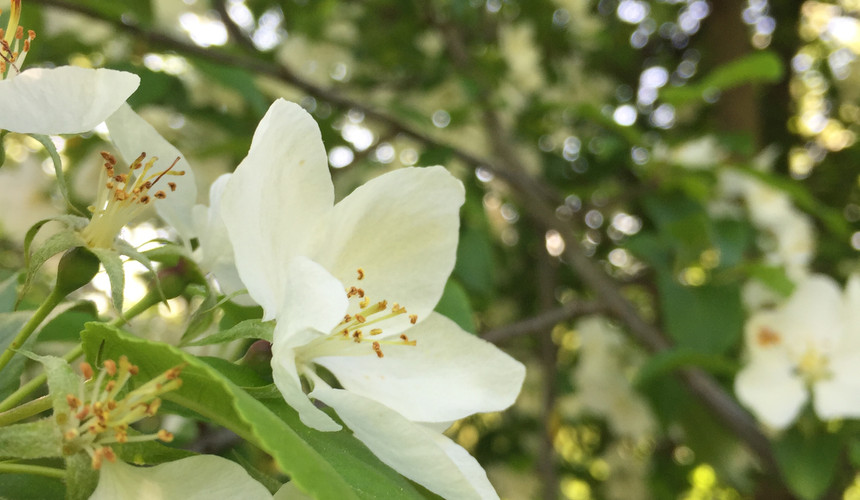
If you are like me, then you probably start to look for flowers as soon as the temperature warms up. If you aren’t, I am sure you have admired at least once the colourful display of a flower garden! During my walks, I always keep an eye out for hyacinths and wild columbines. Although hyacinths are not native to North America, their scent reminds me of spring in my hometown and I don’t want to imagine a world without them. Do you have a favourite flower? If so, how would you feel if this stopped flowering?
As I previously mentioned, our planet is experiencing a steady increase in temperature due to anthropogenic factors [1]. This means that winters are also becoming milder and shorter; and even though this may seem like a great thing for Canada since we wouldn’t have to bundle up, it harms perennial flowering plants [2] and crops [3].
Many plant species (e.g. columbines, beets, kale) require exposure to a period of low temperatures to produce flowers and fruits. This process is called vernalization and allows the plant to reach vegetative maturity before reproductive development [4]. The central gene involved in this process is known as FLOWERING LOCUS C (FLC) and it is regulated by environmental cues. FLC expression gradually becomes repressed at the first signs of cold temperatures, and its repression is maintained as ambient temperatures increase during the spring allowing the plant to flower. A previous study showed that FLC transcription is reduced almost by half after the first day of cold exposure, but it reaches a relatively constant rate after the 5th day of constant exposure [5]. The repression is also associated with increased activity of histone3 lysine 27 trimethylation (remember my previous post?!) and its accumulation reflects the length of cold exposure [4, 6]. The duration of the cold period is also crucial as it determines the stability of FLC through the dynamics of chromatin modifications [4,7].
The expression of FLC is reset at every generation, which means that the memory of vernalization is erased each year thus allowing for new adjustments of the flowering time. Two proteins (FRI and PAF1) are highly active during autumn and are responsible for the initiation of vernalization [8,9]. The PAF1 complex will bring FRI to the FLC locus, while the FRI complex acts as an activator of FLC by binding to the FLC promoter [4]. During this time, the chromatin is open and FLC transcription actively occurs. This allows for vegetative development before winter exposure. During cold exposure, FLC is gradually silenced due to the activity of the PRC2-PHD complex. PRC2-PHD recruits a protein (COLDAIR) which facilitates the methylation of histone 3 lysine 27 (H3K27), suppresses FLC transcription, and gradually condenses the chromatin [10,11]. After prolonged cold exposure, the number of cells in which FLC is silenced increases [11].


However, high temperatures can erase FLC silencing stability, and lead to devernalization [7], which sets back flowering. The erasing effect of heat highlights a risk for winter plants as climate change leads to more extreme and unpredictable weather patterns. It’s mind-blowing, but research estimated that the global yields of the six most widely grown crops (wheat, rice, maize, soybeans, barley, and sorghum) will drop between 0.6% and 8.9% for every 1°C the temperature increases [12]. Notably, a lack of flowering plants due to increasing temperatures will not only affect us, but it will also increase the chances of drought and affect pollinators who are essential for fertilization. For instance, in drought conditions flowers produce less pollen and nectar [13] and are more likely to be visited by ‘starving’ pollinators per day. Although the pollinators may visit more often, they deposit less pollen per visit which can impact the pollination success [13].
Even though the potential effect that climate change has on flowering is alarming, it is important to appreciate the plant mechanisms that are adapting to these changes. I am not ready to imagine a world without flowers, and I am hopeful that this problem will be ameliorated via conscious living and biotechnology.

References
1. NOAA National Centers for Environmental Information. 2020. State of the Climate: Global Climate Report for Annual 2019. https://www.ncdc.noaa.gov/sotc/global/201913.
2. Perilleux, C., A. Pieltain, G. Jacquemin, F. Bouche, N. Detry, M. D’Aloia, L. Thiry, P. Aljochim, M. Delansnay, A. Mathieu, S. Lutts, and P. Tocquin. 2013. A root chicory MADS-box sequence and the Arabidopsis flowering repressor FLC share common features that suggest conserved function in vernalization and de-vernalization responses. Plant Journal 75:390–402
3. Deng, W., M. C. Casao, P. Wang, K. Sato, P. Hayes. E. J. Finnegan, and B. Trevaskis. 2015. Direct links between the vernalization response and other key traits of cereal crops. Nature Communications 6:5882. https://doi.org/10.1038/ncomms6882
4. Iwasaki, M., and J. Paszkowski. 2014. Epigenetic memory in plants. EMBO J 33:1987-1998.
5. Finnegan, E. 2015. Time-dependent stabilization of the +1 nucleosome is an early step in the transition to stable cold-induced repression of FLC. The Plant Journal 84:875-885.
6. Lamke, J., and I. Baurle. 2017. Epigenetic and chromatin-based mechanisms in environmental stress adaptation and stress memory in plants. Genome Biology 18:124. https://doi.org/10.1186/s13059-017-1263-6
7. Bouche, F., N. Detry, and C. Perileux. 2015. Heat can erase epigenetic marks of vernalization in Arabidopsis. Plant Signaling & Behavior 10:e990799. https://doi.org/10.4161/15592324.2014.990799
8. Johanson, U., J. West, C. Lister, S. Michaels, R. Amasino, and C. Dean. 2000. Molecular analysis of FRIGIDA, a major determinant of natural variation in Arabidopsis flowering time. Science 290:344 – 347.
9. Ko, H., I. Mitina, Y. Tamada, Y. Hyun, Y. Choi, R. Amasino, B. Noh, and Y. Noh. 2010, Growth habit determination by the balance of histone methylation activities in Arabidopsis. EMBO J 29:3208 – 3215.
10. Bastow, R, J. Mylne, C. Lister, Z. Lippman, R. Martienssen, and C. Dean. 2004. Vernalization requires epigenetic silencing of FLC by histone methylation. Nature 427:164 – 167.
11. Song, J., A. Angel, M. Howard, and C. Dean. 2012. Vernalization - a cold-induced epigenetic switch. J Cell Sci 125:3723 – 3731.
12. Lobell, D.B., and C. Field. 2007.Global scale climate-crop yield relation-ships and the impacts of recent warming. Environ. Res. Lett. 2:1–7.
13. Waser, N. M., and M. Price. 2016. Drought, pollen and nectar availability, and pollination success. Ecology 97:1400-1409.


Comments